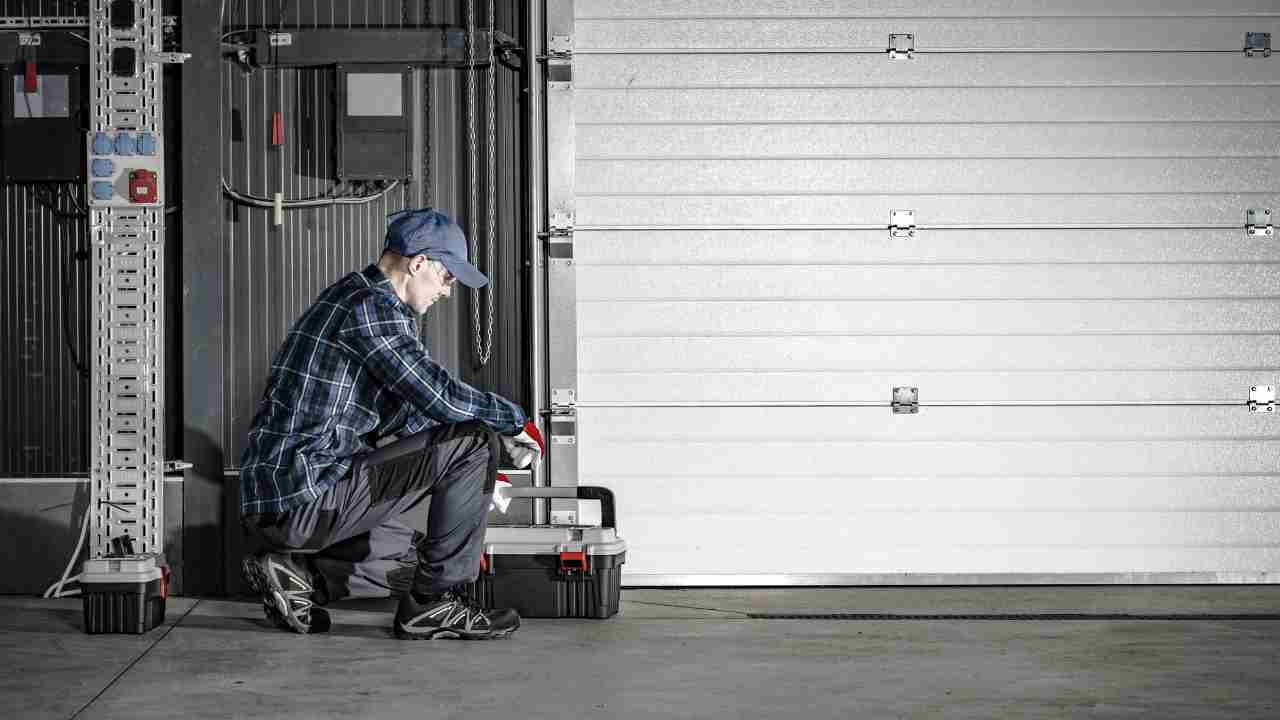
In the architectural landscape of Chicago, the garage door is far more than a simple utility. It is a structural gatekeeper that must endure one of the most volatile urban climates in North America. From the “Lake Effect” snow that dumps moisture across the North Side to the punishing heat waves of July, the garage door is a kinetic machine that spends its life fighting the laws of thermodynamics and metallurgy.
For the Chicago homeowner, a garage door failure is rarely a minor inconvenience. It is a security breach and a thermal disaster. When the mercury drops to -15°F, a malfunctioning door can lead to frozen pipes in adjacent walls or a vehicle that refuses to start in the frigid morning air. Mastering this ecosystem requires moving beyond basic “fixes” and understanding the specialized engineering required to keep a 300-pound moving wall operational in a city that never stops.
The Metallurgy of the Deep Freeze
The physics of a Chicago winter are particularly cruel to mechanical systems. Metal contracts as temperatures drop, and in a system with tolerances measured in millimeters, this contraction is significant. When the steel tracks of a garage door shrink, they can pinch the rollers, creating excessive friction that strains the motor. Furthermore, the torsion springs, the high-tension coils that actually lift the door, become increasingly brittle in extreme cold.
A spring that has performed perfectly for five years in moderate temperatures may suddenly snap on a sub-zero morning. This is not a coincidence; the cold accelerates metal fatigue, causing microscopic cracks to propagate until the steel fails catastrophically. To combat this, Chicago residential systems require high-cycle springs treated with cold-weather coatings. Without professional calibration, a spring that is even slightly “under-wound” will force the opener to compensate for the dead weight, leading to a burnt-out drive gear exactly when you need it most. This level of environmental precision is why residents consistently seek the Best Garage Door Services in Chicago to ensure their hardware is rated for the local “climatology of stress.”
The Thermal Envelope: Managing the 40-Degree Shift
In a city where the temperature can swing 40 degrees in a single twelve-hour period, insulation is not an optional luxury. An attached garage is essentially a massive “thermal hole” in your home’s defense. If your garage shares a wall with your living room or sits beneath a bedroom, an uninsulated door acts as a radiator in reverse, sucking the heat out of your home.
The modern standard for Chicago is the polyurethane-injected “sandwich” door. Unlike cheaper polystyrene (Styrofoam) panels that are merely tucked into the back of the door, polyurethane is a liquid foam that expands and bonds to the steel skins. This creates a solid, structural composite that offers an R-value of 12 to 18. This thermal barrier is vital because it keeps the internal temperature of the garage above freezing even when the outside air is lethal. This prevents “bottom seal freeze,” a common Chicago phenomenon where melting snow refreezes overnight, effectively gluing the door’s rubber gasket to the concrete driveway. If the motor tries to open a door that is frozen to the ground, it can tear the panels or strip the opener’s internal gears in seconds.
The Humidity Factor and the “Windy City” Gusts
While winter gets most of the attention, Chicago’s humid summers and high-wind events provide their own set of challenges. High humidity levels can cause wooden doors to swell and warp, while salt-heavy slush from winter can lead to “bottom-up” corrosion on steel panels.
Moreover, Chicago is prone to sudden, high-velocity wind gusts that can create a “parachute effect” on a large, flat garage door. If a door is not properly reinforced with horizontal struts, a strong wind can actually bow the door inward, popping it out of its tracks or damaging the vertical jambs. Ensuring that a door is “wind-load” rated is a critical, often overlooked step in urban property management. A reinforced door maintains its structural “square,” preventing the racking and twisting that leads to long-term mechanical failure.
Smart Security and the Urban Perimeter
Security in an urban environment like Chicago has moved beyond simple locks. The modern garage is a node in a digital security network. With the rise of “porch piracy” and urban property crime, the garage has become a preferred entry point for intruders. Modern access systems have largely eliminated the vulnerability of “code grabbing”, where a thief could intercept a remote’s signal, by using billions of rolling-code combinations.
The 2026 standard for Chicago homes involves integrated cameras and geofencing. This allows the door to recognize the homeowner’s smartphone and open automatically as they enter the alleyway, reducing the time spent idling in a vulnerable position. It also allows for “monitored delivery,” where a courier is granted temporary, one-time access to place a package inside the garage, keeping it safe from the elements and from theft. However, these digital systems are only as reliable as the hardware they control. A high-tech smart opener is useless if the mechanical rollers are seized or the tracks are misaligned.
The Maintenance Protocol: A Seasonal Diagnostic
Given the environmental pressures of the Midwest, a “wait until it breaks” strategy is the most expensive way to manage a home. If you notice early garage door noise issues, it may indicate deeper mechanical problems such as worn rollers, poor lubrication, or misaligned tracks.
- Lubricant Chemistry: Standard grease or WD-40 is insufficient for Chicago. In the winter, grease becomes a gummy paste that attracts grit. Professionals use silicone-based or lithium-based lubricants that maintain their viscosity at -20°F.
- The Reversal Test: Ice and salt can build up on the garage floor, creating an uneven surface that tricks the door’s safety sensors. Regular testing ensures that the door will reverse if it encounters an obstruction, protecting vehicles and pedestrians.
- Fastener Fatigue: The constant vibration of the door, combined with thermal expansion and contraction, can loosen the bolts that hold the tracks to the wall. A loose track can lead to a “derailment,” which is one of the most dangerous and expensive failures a system can experience.
Investing in Longevity
Ultimately, the garage door is a reflection of the home’s overall health. In the competitive Chicago real estate market, a high-performance, aesthetically pleasing door is one of the few renovations that provides an immediate return on investment. It signals to potential buyers that the home’s thermal envelope is secure and its mechanical systems are modern.
By choosing hardware designed for the extremes of the Great Lakes region and relying on the Best Garage Door Services in Chicago, homeowners can transform a potential liability into a silent, reliable asset. In a city defined by its grit and its architecture, ensuring your home’s primary gateway is engineered to withstand the elements is the ultimate form of property stewardship. Maintaining that mechanical balance isn’t just about convenience, it’s about ensuring that your home remains a fortress against the unpredictable Chicago sky.

